
Christmas bazaar organiser renting stalls to local makers in Mexico
Rent tables to local makers for a few weeks and turn an empty hall into a seasonal market.

- Startup cost
- $300–3k
- Mid budget · $1k–10k
- Difficulty
- Medium
- Revenue potential
- Side income
- Time to launch
- Weeks
- Seen in
- Mexico
Costs and revenue are rough estimates based on the source and may differ by country.
Organise a Christmas bazaar in your town and charge local makers and sellers a fee for stall space, while building a community event shoppers look forward to.
The idea
A Christmas bazaar is a temporary market that you organise: you find a venue, set a date, rent stalls to local makers and small sellers, and bring in the shoppers. Your income is the stall fee. The idea is seen in Mexico, where it is presented as a way for sellers to show and sell their products while also creating a community space. The source gives no figures, so everything on money below is an estimate.
What vendors pay for is access to a crowd of gift buyers at the busiest time of year, without having to rent a shop.
Who it fits
It suits a well-connected person who is good at organising and talking to people: a neighbourhood regular, a parent-group member, a craft-fair seller. You need a phone, a social media account and a venue contact. It works beside a job, since most work happens in the evenings for a few weeks, with the event itself lasting a weekend or several. It would work in any place with a Christmas gift tradition and local makers: small towns, suburbs, schools, parishes, community halls and courtyards.
Costs and revenue
Expect roughly $300–$3,000 to start, depending on venue rent, tables, simple signage and advertising. Often you can borrow a school, church hall or café courtyard in exchange for a share of fees or a donation.
- Stall fees typically range from about $15 to $60 per stall per day, depending on the town and venue.
- With 20–40 stalls over one weekend, expect gross revenue of roughly $600–$4,000 before costs.
- Extra income can come from a food stall area, a sponsor or a small entry or raffle fee.
- A realistic first season brings a few hundred dollars net; repeat events can bring more.
Risks and pitfalls
- Low footfall: vendors will not return if nobody comes. Promote early through local groups, schools and posters, and choose a busy place.
- Too many similar stalls: curate categories (crafts, sweets, decor, gifts) so each seller has a chance.
- Permits and safety: check local rules for events, food sales and capacity, and get the venue owner's written agreement.
- Weather and cancellations: prefer covered space, and set a clear refund policy for stall fees.
- Short season: the income is concentrated in a few weeks, so plan other events (Mother's Day, spring fairs) to use your vendor list.
How to start
6 stepsTalk to ten local makers to check they would pay for a stall and what fee feels fair.
Secure a venue with good footfall, in writing, and confirm dates, capacity and rules.
Check local event, food-sale and insurance requirements with the municipality.
Open stall bookings with a deposit and curate a balanced mix of products.
Promote through local social groups, schools, posters and the vendors' own followers.
Collect vendor and shopper feedback, then plan the next seasonal market.
More in: Retail

 United States
Buying storage unit auctions and reselling clothes and shoes online
You bid on a whole room of unknown stuff, then sell the best items one by one.
Reselling discarded furniture and goods from a car in Nashville
A former homeless man in Nashville turned what people throw away into online sales.

 Brazil
Turn a ride-hail car into a mobile bookshop, as seen in Brazil
Every passenger gives you a few minutes of conversation. One author turned them into book sales.
More from this day
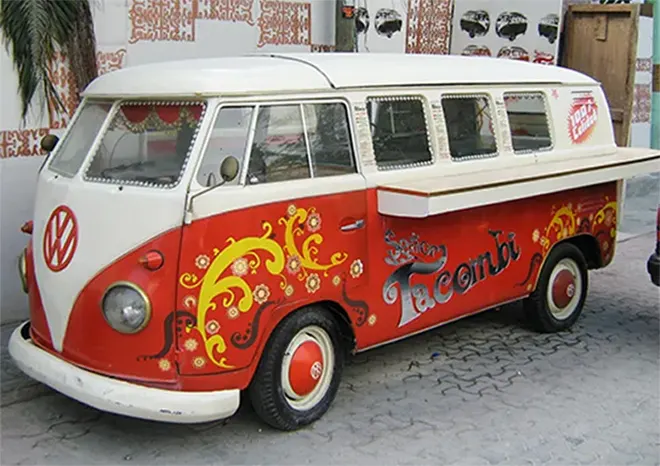
Old Volkswagen van turned into a street taco stand for beach towns
A worn-out 1963 van, a griddle and a beach full of hungry tourists: how one taco stand began.
Selling baklava by hand to concert crowds in New York
Three trays of baklava and a bold hello turned a joke bet into a real business.

 India
Growing oyster mushrooms on leftover paddy straw in India
Straw that farmers burn can become fresh mushrooms for local markets and restaurants.

 Thailand
Seasonal pre-order cake baked once a year from a home kitchen
One cake, one season a year: scarcity turns a home recipe into something people wait for.