
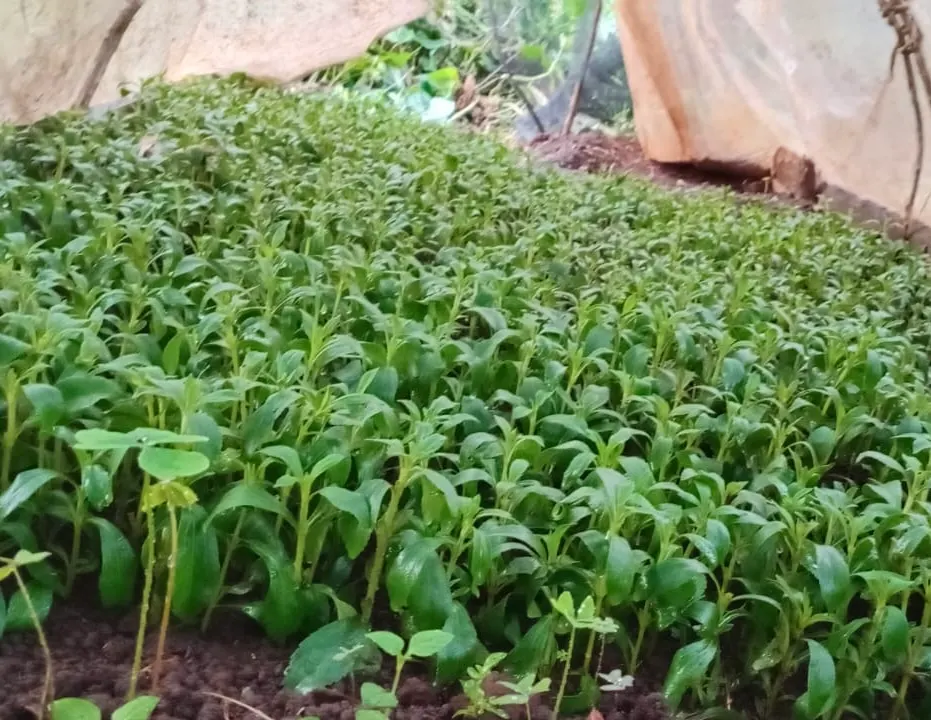
Homegrown stevia sweetener powder sold in small bags in Kericho
A leaf that is about ten times sweeter than sugar can be grown, ground and sold from half an acre.
- Startup cost
- $150–900
- Low budget · under $1k
- Difficulty
- Medium
- Revenue potential
- Side income
- Time to launch
- Months
- Seen in
- Kenya
Costs and revenue are rough estimates based on the source and may differ by country.
Grow stevia on a small plot, dry and grind the leaves, and sell the powder in small bags to households and shops as a sugar replacement far cheaper than sugar.
The idea
Stevia is a plant whose leaves are roughly ten times sweeter than sugar. The idea is simple: grow it on a small plot, dry the leaves, grind them into a green powder and sell it in small bags to households, tea drinkers and local shops as a cheaper sugar replacement.
It is seen in Kericho, Kenya. Farmer Ken Langat was trained to grow stevia in 2010 by the company Pure Circle, which later left Kenya in 2018. He kept growing it and says he has only renewed his plants twice in 15 years. From half an acre he produces about 400 kg a month. He now crushes dried leaves with a mortar and pestle and sells the powder to individuals in Kericho. He sells a kilogram for around Sh200, while the sugar needed for the same sweetening power costs families over Sh1,500. He also sells seedlings.
Who it fits
This suits a smallholder or a family with a bit of land, in a mild, rainy climate where stevia already grows. It needs patience and basic farm skills, not machinery. It works beside a job or another crop, since the plot is small. Similar markets exist wherever sugar is expensive and tea or porridge is drunk daily, for example in East Africa, South Asia and Latin America.
Costs and revenue
These are editorial estimates. Expect roughly $150–900 for seedlings, land preparation, a drying rack or tray, a grinder, a sieve and packaging. Ken's source prices were about Sh200–250 per kg of dried stevia; in his best years, before 2018, half an acre brought him around Sh50,000 per monthly harvest, though he says that was at peak demand. Selling small retail bags of powder at a higher price per kilo than bulk leaf can add margin. A realistic side income is perhaps $50–300 a month once plants are established and you have regular buyers.
Risks and pitfalls
- Slow start: plants need months to grow. Begin with seedlings and a small test batch.
- Weak demand: many farmers scaled down after buyers left. Sell directly to neighbours, tea kiosks and shops before planting more.
- Taste: stevia can taste bitter if over-used. Give a sample and a simple guide such as a pinch per cup.
- Hygiene and rules: dry on clean racks and pack cleanly. Check local food-labelling and registration rules before selling in shops.
- Price swings: do not uproot your main crop. Grow stevia alongside it first.
How to start
6 stepsTest demand: offer free samples in tea to neighbours and kiosk owners and note what they would pay.
Buy stevia seedlings from an experienced local grower and plant a small plot first.
Build clean drying trays, then buy a grinder or mortar, a fine sieve and small food-safe bags.
Check local rules on food labelling and registration before selling through shops.
Sell small bags to households and tea sellers, with a simple dosage tip on each bag.
Add dried stevia tea or seedlings as extra products once regular buyers appear.
More in: Agriculture
 India
Backyard earthworm farm selling vermicompost and live worms in India
A widow started with about $6 and a bamboo bed of worms; the waste they eat became her income.
 United States
Weekly goat rental for brush and weed clearing in the US
Goats that clear brush and vines for paying landowners, with no herbicide and no heavy machinery.
More from this day
One-person direct mail service for local shops and restaurants
Local shops still want customers on their doorstep, and you can design, print and deliver the postcards.