
Door-to-door old clothes buying by weight in Mumbai
Households have piles of old clothes they want gone, and traders and artisans will pay for sorted bundles.
- Startup cost
- $100–600
- Low budget · under $1k
- Difficulty
- Easy
- Revenue potential
- Full-time living
- Time to launch
- Weeks
- Seen in
- India
Costs and revenue are rough estimates based on the source and may differ by country.
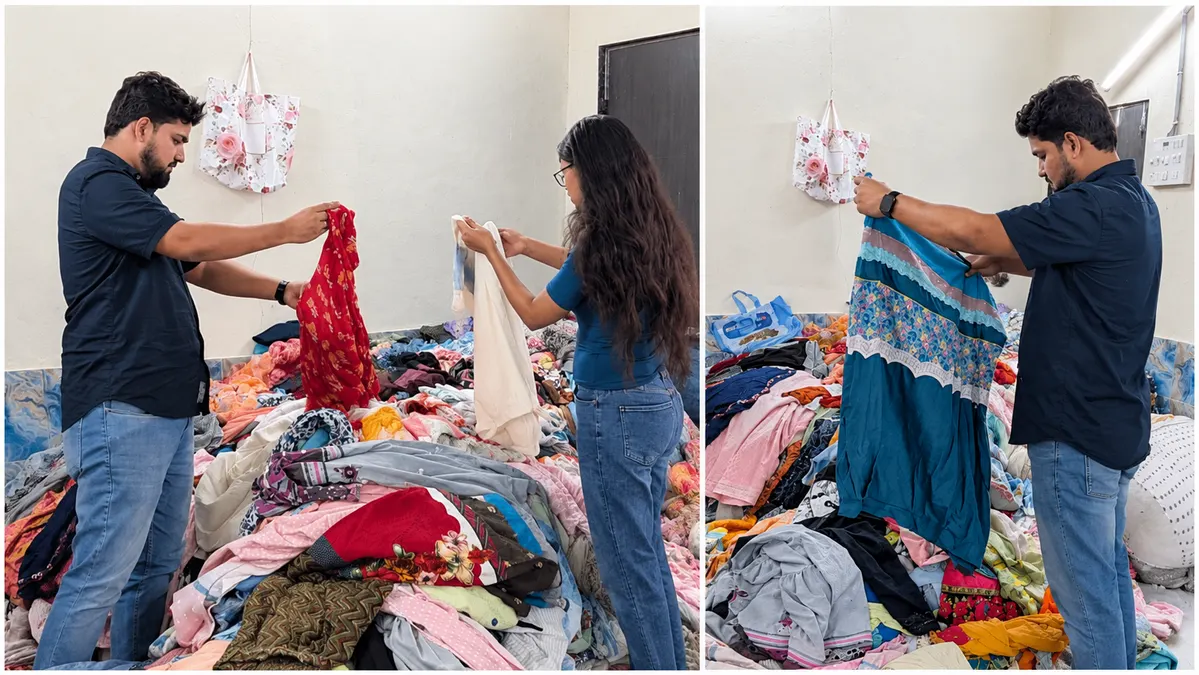
Buy used clothes from neighbours by weight, sort them by condition, and sell the bundles to village traders and artisans. A bhandiwala trade, made more regular.
The idea
You walk or ride through your neighbourhood and buy old clothes from households, paying by weight or swapping them for useful items. Back home you sort the pile by condition and fabric, then sell it on in bundles. Wearable clothes go to second-hand traders and rural markets; torn T-shirts and worn bedsheets go to artisans who turn fabric into bags, pouches and similar goods.
This is the traditional work of the bhandiwala in Mumbai, who historically traded old clothes for steel utensils. Anil Datanini, a bhandiwala from Gujarat, says he entered the trade around age 15. His problem was uncertain supply: some days brought plenty of clothes, others very little. Since January 2026 he has received a more regular flow of used clothing through TWIN, a Mumbai enterprise, and says he now earns between Rs 25,000 and Rs 30,000 a month, sometimes more. TWIN reports about 17,500 kg collected from more than 650 households. This profile covers the one-person version: you, buying and sorting.
Who it fits
Anyone fit enough to carry sacks and happy to talk to strangers. No special skills are needed, only a good eye for what is still wearable. It works beside a job if you collect in the evenings and at weekends. A bicycle, handcart or small van widens your range. It suits dense cities with many apartment blocks, and anywhere second-hand clothing markets exist, such as other parts of South Asia, Africa or Latin America.
Costs and revenue
Expect roughly $100–600 to start: sacks, a scale, a cart or bike, some ID and a phone for messaging. Treat all figures as estimates. Your margin is the gap between what you pay per kilo and what sorted bundles fetch. Wearable grades pay far more than rags, so sorting is where the money is. A realistic range for one person working full time is around $150–400 a month in a low-cost market, more if you secure regular buyers and bulk sources such as housing societies.
Risks and pitfalls
- Unstable supply: some days yield little. Agree regular pickup days with housing societies and shops.
- Thin margins: if you overpay households you lose money. Fix a price per kilo by grade and weigh in front of the seller.
- Hygiene: wear gloves, dry bundles and keep damp cloth out of storage to avoid mould.
- Buyer dependence: one trader can set your price. Build two or three outlets, including artisans.
- Local rules: check whether you need a trader's registration or society permission to enter buildings.
How to start
6 stepsWalk your area and ask 20 households what clothes they would sell or give away.
Buy a hanging scale, large sacks and a cart or bicycle, and carry some form of ID.
Ask housing societies for permission to collect, and set a regular pickup day.
Set a price per kilo by grade, then sort each haul into wearable, reusable fabric and rags.
Visit second-hand markets and artisan groups to find two or three buyers for your bundles.
Track what you pay and earn per kilo, then add streets, schools or shops as sources.
More in: Green & circular
 Vietnam
Paid e-bike charging point in a home garage in Vietnam
Your garage or front yard can earn money while Vietnam's riders switch to electric.

 Brazil
Collecting salon hair clippings for oil-absorbing mat makers
Barbershop floor sweepings are becoming raw material for ocean oil-spill barriers.