
Boxwood and herb kissing balls sold at Christmas markets
An old doorway charm made from garden clippings turns into a seasonal side income.
- Startup cost
- $60–300
- Low budget · under $1k
- Difficulty
- Easy
- Revenue potential
- Side income
- Time to launch
- Days
- Seen in
- United States
Costs and revenue are rough estimates based on the source and may differ by country.
Turn boxwood and herb clippings into traditional kissing balls and sell them to neighbours and at Christmas markets. Each takes minutes and costs very little.
The idea
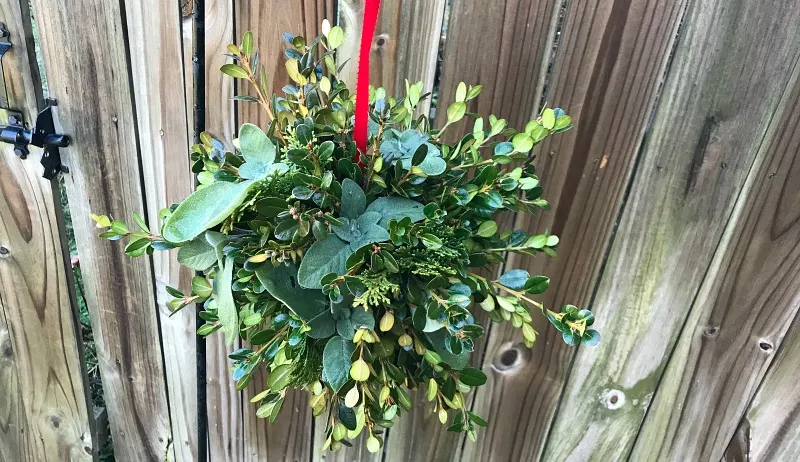
A kissing ball is a traditional holiday decoration: a sphere of evergreen sprigs and herbs, hung over a doorway much like mistletoe. The tradition dates to the Middle Ages, and the ball is linked with good luck, health and fertility. In the version described in the US, a 4-inch polystyrene ball is covered with boxwood stems, then rosemary, sage, oregano or scented geranium and a few accent evergreens are tucked in. A ribbon loop is pinned on with a florist-wire hairpin. According to the source, it takes only a few minutes to assemble, and the greenery dries in place, so the buyer never needs to water it.
You make them from clippings and sell them at Christmas markets, to neighbours, and to friends before the season starts. Customers pay for a handmade, fragrant, natural alternative to plastic wreaths that carries a story.
Who it fits
Anyone with a garden, allotment or access to hedges can do it, and no special skill is needed beyond a steady hand and some taste. It suits evenings and weekends beside a job. The work is seasonal, mostly from late October to mid December. Anywhere with evergreens and a winter holiday tradition could support it, including the UK, Germany, Canada and much of Europe.
Costs and revenue
These are rough estimates. Foam balls, florist wire, ribbon, hot glue and a market-stall licence or table fee typically bring the startup to about $60–300. Per ball, expect materials of around $1–3 if you grow the greenery yourself.
Charging roughly $15–30 per ball, depending on size and extras such as pinecones or berries, is realistic. Selling 20–60 in a season would give around $300–1,500, mostly in November and December.
Risks and pitfalls
- Short season: nearly all sales fall in six weeks. Take pre-orders from neighbours in early November.
- Running out of greenery: harvest lightly and ask friends for clippings, so you don't strip your own hedge.
- Dryness and shedding: the greenery dries in place, so tell buyers to keep it away from direct heat and bin it when brittle.
- Market fees and rules: check stall fees and local rules for selling plants or crafts.
- Copycats: add a distinct style with ribbon, berries or cones, and label each ball with its herbs and meaning.
How to start
6 stepsMake three test balls from your own clippings and check how they look after a week.
Buy foam balls, florist wire, ribbon and hot glue in bulk from a craft or florist supplier.
Book a Christmas market table and check local rules for selling handmade goods.
Photograph the balls and take pre-orders from neighbours and local social media groups.
Price at about $15–30 and offer bundles of two or a gift tag explaining the tradition.
Keep a customer list and sell wreaths or table decorations next season.
More in: Crafts & making

 China
Evening sidewalk stall selling food-shaped hair clips in Qingdao
Tiny sushi and dumplings on a hair clip: a PhD couple turned their after-work hours into a stall.
 United Kingdom
Baby card keepsakes: framing newborn cards for parents in the UK
Parents keep every card for a newborn, but few know what to do with them. You can sell the answer.

 Vietnam
Hand-carved horn combs from a home workshop, Thuy Ung style
A 500-year-old village craft turns buffalo horn into combs that win gift buyers and export orders.
Wood-burned drumsticks and home decor from a home workshop
A hobby woodburning pen turns plain drumsticks into custom gifts that musicians happily pay extra for.